Diving in Ohrid
Diving in Ohrid — Explore One of the World’s Oldest Lakes
Scuba diving in Lake Ohrid: endemic life found nowhere else, crystal-clear water, freshwater springs and underwater archaeology in a living lake over a million years old.
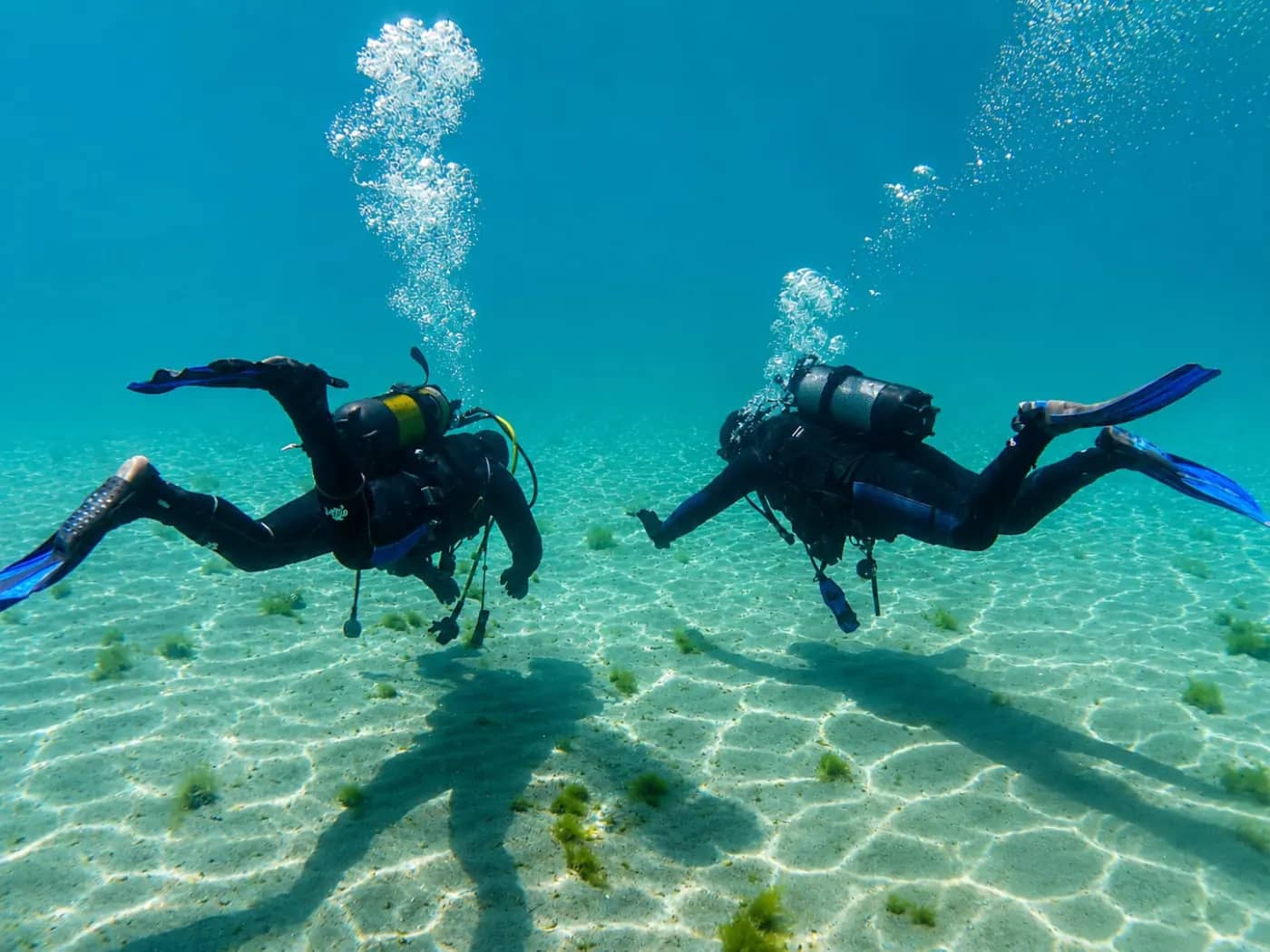
Most people come to Ohrid for the old town, the monasteries and the views. The ones who dive discover something almost no other destination in the world can offer: the chance to descend into a living lake more than a million years old, surrounded by species that exist nowhere else on Earth. Diving in Ohrid is not about coral reefs or warm tropical water — it is about clarity, silence, ancient geology and an underwater world that feels untouched by time.
Lake Ohrid is one of the rare places on the planet inscribed on the UNESCO World Heritage list for both its natural and its cultural value. Beneath its surface lies the same story told above it: endemic life found only here, freshwater springs welling up from the lakebed, and the submerged remains of settlements thousands of years old. If you are looking for a dive that is genuinely different, this is it.
This page covers everything you need to know about scuba diving in Ohrid — what you will see, the best dive sites, the conditions to expect, who can dive, and how to get in the water with us.
Why diving in Ohrid is unlike anywhere else
Lake Ohrid is what scientists call an “ancient lake” — one of only a handful in the world that have existed continuously for over a million years. Deep-drilling research has dated its continuous existence to around 1.36 million years, with the tectonic basin itself older still. That extraordinary age, combined with the lake’s isolation, has produced a wealth of biodiversity that has earned Ohrid the nickname “a museum of living fossils.”
For a diver, that translates into a unique experience:
- Endemic life you can’t see anywhere else. The lake is home to more than 200 endemic species — fish, snails, sponges, flatworms and crustaceans that evolved here and exist nowhere else in the world.
- Exceptional clarity. Lake Ohrid is oligotrophic — low in nutrients, high in oxygen and remarkably clear. On a good day, underwater visibility is far better than most divers expect from a lake.
- Underwater archaeology. Ohrid has been inhabited for thousands of years, and parts of that history lie beneath the water, including the famous prehistoric pile-dwelling site at the Bay of Bones.
- Dramatic underwater terrain. Steep walls, drop-offs and cold freshwater springs make for varied, atmospheric dives in a true high-altitude freshwater environment.
In short, diving Lake Ohrid is less like a holiday dive and more like exploring a natural and historical archive — one that very few people ever get to see.
What you’ll see underwater
Descend into Lake Ohrid and the first thing you notice is the stillness and the light. As you drop along the slopes, the warm surface water gives way to cooler, clearer depths.
You may encounter the lake’s celebrated endemic fish, including the Ohrid trout, alongside smaller species moving among the rocks and reed beds. In places, you can watch cold, clear water rising from underwater springs in the lakebed — one of the natural wonders that keeps the lake so clean. Rocky walls and ledges create shelter for life and add real character to each dive.
For divers with an interest in history, the Bay of Bones (Залив на Коски) is the highlight. Above the water it is a reconstructed museum of a prehistoric settlement built on wooden platforms; below the surface lies a protected archaeological zone — a rare chance to dive over genuine traces of the past.
Top dive sites around Lake Ohrid
Diving in Ohrid is spread along the lake’s shoreline, with each area offering something a little different. Conditions and access vary by season, so dives are arranged with a club or guide who knows the lake.
- Bay of Bones (Залив на Коски) — the signature Ohrid dive: a protected underwater archaeological site near the reconstructed pile-dwelling museum, combining history and nature in one dive.
- Sveti Naum springs — at the southern end of the lake, where dozens of crystal-clear springs feed cold water into Ohrid, creating a striking, otherworldly setting.
- Trpejca — a picturesque shoreline village area offering scenic underwater terrain and slopes.
- Ljubaništa — a calm, clear stretch of shoreline near the south of the lake, popular for swimming and an easy entry point to the water.
Because dive sites depend on weather, water conditions and protection rules, the best approach is to plan your diving in Ohrid through us — see our diving page for current details on locations and access.
Diving conditions — what to expect
Lake Ohrid is a high-altitude freshwater lake, and that gives it a distinctive profile every diver should understand before getting in.
Altitude. The lake sits at about 695 metres above sea level, which means altitude-diving rules apply. Dive planning, no-decompression limits and surface intervals all need to account for the elevation, which is exactly why diving with a certified club or guide matters here.
Temperature and the thermocline. This is the single thing that surprises new divers most. In summer, the surface water is a pleasant 23–26 °C, but there is a sharp thermocline at roughly 10–15 metres. Below it, the water stays a constant, cold 6–8 °C year-round. A good wetsuit (or a drysuit for longer or deeper dives) is essential — what feels warm at the surface becomes genuinely cold at depth.
Visibility.Thanks to the lake’s clean, oligotrophic water, visibility is often excellent, particularly in the calmer months. Early summer and early autumn tend to offer the clearest conditions.
Depth. Lake Ohrid reaches a maximum depth of around 288 metres — the deepest lake in the Balkans. Recreational diving, of course, stays within standard limits, typically in the 5–30 metre range, but knowing the lake plunges so deep adds to the sense of diving somewhere truly significant.
Season. The best time for diving in Ohrid is late spring to early autumn, roughly May to October, when surface temperatures and visibility are at their best. June and September offer a great balance of good conditions and fewer crowds.
Who can dive in Ohrid — beginners and certified divers
One of the best things about diving Lake Ohrid is that it works for a wide range of people.
Certified divers. If you already hold an Open Water certification or higher, you can dive Ohrid as part of a guided dive, exploring the sites along the shoreline. Because of the altitude and the cold deep water, we strongly recommend diving with a local club or guide who knows the lake’s conditions and protected areas.
Complete beginners. Never dived before? You can still experience Lake Ohrid through a try dive (Discover Scuba-style experience) with an instructor, in a shallow, controlled area near the shore. It is a safe, supervised way to breathe underwater for the first time and get a taste of what makes this lake so special.
Those wanting to learn. If diving Ohrid leaves you wanting more, it is the perfect place to begin proper training and work toward your certification in one of the most unusual freshwater environments in the world.
Whatever your level, the priority is always safe, responsible diving suited to the lake — get in touch and we’ll match the dive to your experience.
Dive Ohrid with Amphibia — Diving 4 Nature
We are Amphibia – Diving 4 Nature, an Ohrid-based association for ecology and water sports. For us, diving and protecting the lake are the same thing. Every dive is a chance to experience this remarkable ecosystem — and to help look after it.
When you dive with us, you are not just ticking off an activity. You are exploring Lake Ohrid with people who know its sites, understand its conditions, and care deeply about keeping it pristine. We run guided dives for certified divers, try dives for beginners, and regular environmental actions and underwater clean-ups that anyone can support.
If you would like to dive Ohrid, or join one of our events, see what’s coming up on our activities and events page, or simply contact us to arrange a dive.
Diving responsibly in Lake Ohrid
Lake Ohrid is an ecosystem millions of years old, and its beauty depends on how we treat it. As divers, we are the eyes of the lake beneath the surface — and we have a responsibility to leave it better than we found it.
That means diving without disturbing wildlife or damaging the lakebed, respecting protected archaeological and natural sites, never removing anything, and helping to remove the litter that sinks to the bottom out of sight. Much of the waste in the lake is invisible from the shore but harmful below the surface — and divers are often the only people who can reach it. When you dive responsibly in Ohrid, you become part of protecting one of Europe’s natural treasures. You can read more about our conservation work and why the lakebed matters on our Lake Ohrid conservation guide.
Practical information for diving in Ohrid
Getting to Ohrid. Ohrid has its own airport (St. Paul the Apostle) with seasonal flights, and is well connected by road — about three hours by car or bus from Skopje, with regular transfers from Skopje airport.
When to come. Late spring to early autumn is best for diving, with the clearest water and most comfortable temperatures in June and September.
What to bring. Bring your certification card and logbook if you have them. Exposure protection suited to the cold deep water is essential; talk to us about equipment and whether a wetsuit or drysuit suits your planned dives.
Combine it with the rest of Ohrid. A dive pairs perfectly with the old town, Sveti Naum, the Galičica National Park and a boat trip on the lake — see our guide to things to do in Ohrid to plan your trip.
Frequently asked questions
Diving in Ohrid — answers
Can you scuba dive in Lake Ohrid?+
Yes. Lake Ohrid is an excellent and unusual diving destination, with clear water, endemic underwater life and protected archaeological sites such as the Bay of Bones. You can dive independently with an Open Water certification, or try diving for the first time with an instructor.
Do I need a diving certificate to dive in Ohrid?+
To dive independently you need at least an Open Water certification. If you have never dived before, you can still experience the lake through a supervised try dive with an instructor in a shallow, controlled area.
Is diving in Ohrid suitable for beginners?+
Yes. Beginners can take part in introductory try dives, while Ohrid is also a great place to start full diving training. Certified divers can explore the lake's dive sites on guided dives.
How cold is the water for diving in Lake Ohrid?+
In summer the surface is around 23–26 °C, but below the thermocline (about 10–15 metres) the water stays a constant 6–8 °C all year. Proper exposure protection is essential.
What's the best time of year for diving in Ohrid?+
Late spring to early autumn (roughly May to October) is best, with the clearest visibility and most comfortable temperatures in June and September.
Are there special rules for diving in Lake Ohrid?+
Yes. Because the lake sits at about 695 metres above sea level, altitude-diving rules apply, and many sites are protected. For safe, responsible diving, we recommend diving with a certified local club or guide who knows the lake.
Ready to dive Ohrid?
Descend into a lake older than our species
Whether you are a certified diver looking for somewhere genuinely different, or a complete beginner ready to breathe underwater for the first time, we’d love to take you in. Ohrid is at its most beautiful beneath the surface — come and see it.
Contact us to arrange your dive